Where the mark reads
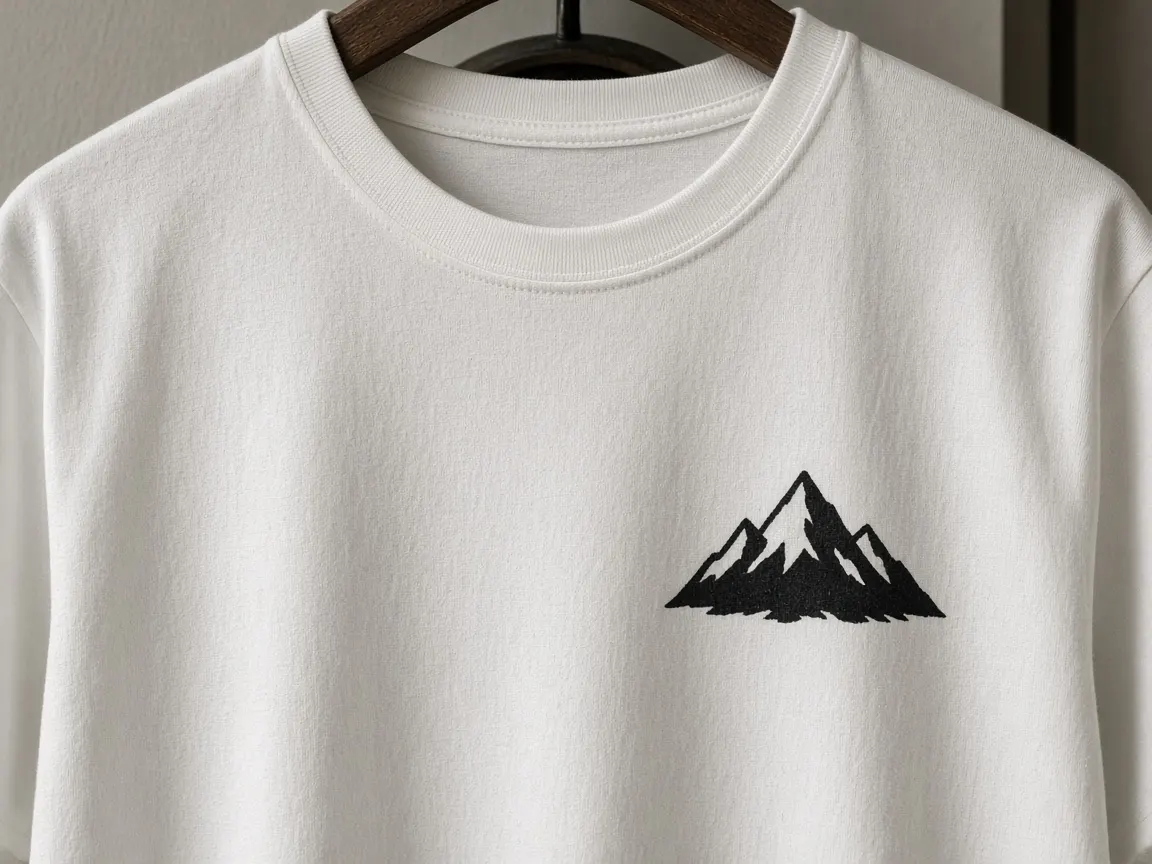
The working place is the left chest or the centre, about a palm or smaller. A huge logo across a work shirt gets in the way and cracks sooner on the seams. Merch you sell can be larger, but the edge still stays off the sleeve seam. On dark cloth a light mark needs an underbase, or it goes grey.
Identical shirts
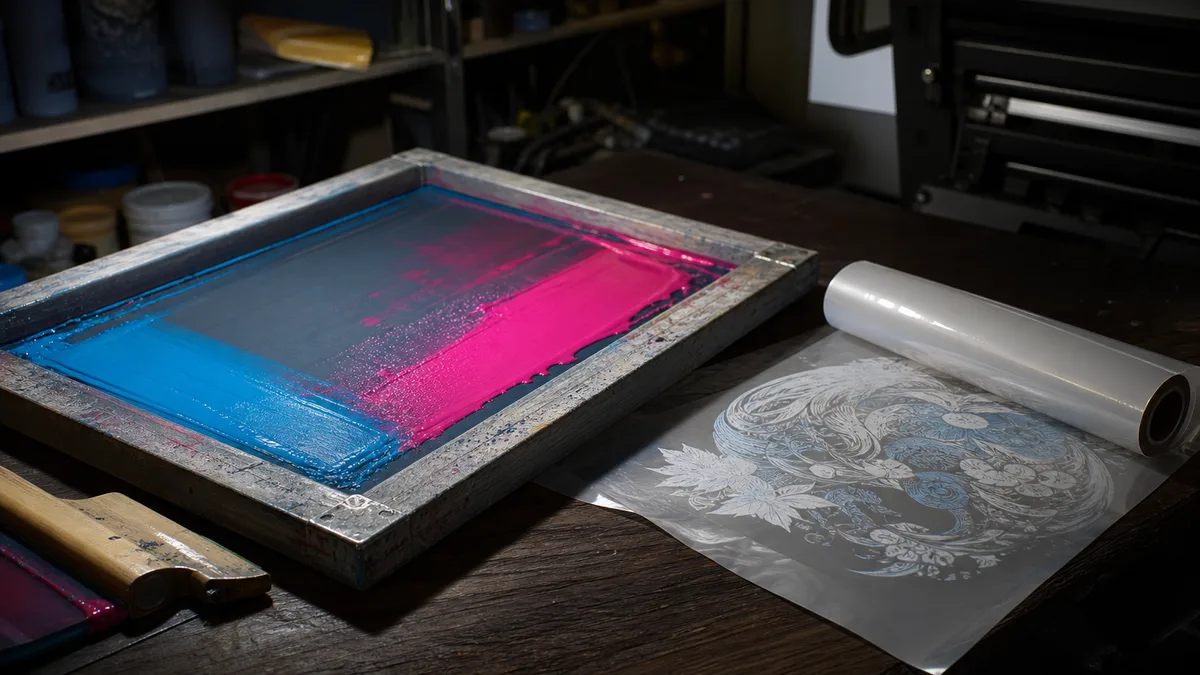
Ten or more pieces with one flat mark in one or two colours go to screen printing. The mesh is made once, and the colour does not wander on a repeat if the file is the same. Tiny type inside the mark should come out before the screens: on cloth it closes up. A vector or a large PNG with a clear background works. A screenshot from a website does not.
A short run and a colour mark
Five shirts with a multi-colour mark, a gradient or a thin outline are DTF. A stencil does not pay for that pile, and the film carries the picture whole. One shirt to see how it sits is also DTF. If the run later grows and the mark is simplified to a solid shape, the repeat can move to a screen.
A simple one-colour shape
A circle, a bar, a short mark without inner holes is cut in vinyl. The edge is clean, the colours are two, not ten. A complex crest with thin gaps is torn apart by vinyl. Simplify it or print it with DTF.
Whose shirt
We print on yours or on stock tees and polos. Stock is a base with no mark, usually S–3XL, and there are no aprons there. If you need both the mark and the garment, that is one order: base first, then the print. Buying empty shirts and printing a logo are different lines.
How to order
Send the file, the shirt colour, where the mark sits and a size table. Telegram @dkretov or +998 90 349 03 64. Before printing we show whether the mark reads from two steps. Pickup in Sergeli or across Tashkent after packing.
Summary
A logo on a t-shirt takes the method the file needs. A run of identical solids is screen printing, a short colour run is DTF, a simple mark is vinyl.